A11 PM Steel and CPM® 10V: What Buyers Should Know
Sep 28th 2026
A11 PM and CPM® 10V are direct substitute powder metallurgy tool steels, and Niagara Specialty Metals has both available for purchase. Carpenter Technology provides an independent technical reference for that relationship, identifying its Micro-Melt® A11 as equivalent in hardness, wear resistance, and heat-treating response to CPM® 10V.
That matters when sourcing material. A print or RFQ may call for A11, A11 PM, PM A11, or CPM® 10V. Buyers searching only one of those names may overlook another available source for essentially the same grade.
At Niagara Specialty Metals, customers can contact our team for availability, sizes, processing options, certifications, and pricing for both A11 PM and CPM® 10V.
Are A11 PM and CPM® 10V Direct Substitutes?
Yes. A11 PM and CPM® 10V can be used as direct substitutes for one another when the material meets the specifications required for the application.
Carpenter Technology states that Micro-Melt® A11 is equivalent to CPM 10V in three important performance areas:
- Hardness
- Wear resistance
- Heat-treating response
Carpenter identifies Micro-Melt® A11 as AISI A11 and describes it as a high-vanadium powder metallurgy tool steel with wear resistance superior to most other tool steels.
For buyers, the practical takeaway is simple. If you are searching for A11 PM, PM A11, A11, or CPM® 10V, Niagara can help with either material.
The different names should not prevent a purchasing team from considering both options. However, buyers should still confirm customer-specific specifications, certifications, dimensions, and material condition before making a substitution.
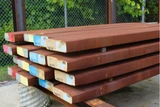
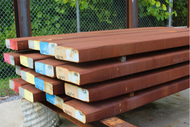
Two racks of A11 PM billets in the Niagara Specialty Metals billet yard ready for processing
How Do A11 PM and CPM® 10V Compare Technically?
The published chemistry and heat-treatment data for A11 and CPM® 10V are closely aligned, which supports their use as direct substitutes in high-wear tooling applications.
Chemical Composition
Niagara's current CPM® 10V data sheet and Carpenter's Micro-Melt® A11 technical information publish the following values:
|
Element |
Niagara CPM® 10V |
Carpenter Micro-Melt® A11 |
|
Carbon |
2.45% typical |
2.45% nominal |
|
Manganese |
0.50% typical |
0.50% maximum |
|
Silicon |
0.90% typical |
0.90% maximum |
|
Chromium |
5.25% typical |
5.30% nominal |
|
Molybdenum |
1.30% typical |
1.30% nominal |
|
Vanadium |
9.75% typical |
9.50% nominal |
The values are not published identically because they come from different producers. However, the main alloying elements are very closely aligned.
The standout element is vanadium. Both materials contain roughly 9.5% to 9.75% vanadium, which supports the large volume of hard vanadium carbides responsible for the grade's exceptional wear resistance.
Heat Treatment and Hardness
The heat-treatment recommendations also show a close relationship.
For its recommended balance of toughness and wear resistance, Niagara calls for CPM® 10V to be austenitized at 2050°F (1120°C) for 30 to 45 minutes, followed by quenching and three tempers at 1025°F (550°C). The target hardness is approximately HRC 60.
Carpenter recommends 2050°F (1121°C) for 20 to 40 minutes when seeking balanced toughness and wear resistance with Micro-Melt® A11. Carpenter lists a resulting tempered hardness of HRC 60 to 62.
Both manufacturers also publish an annealed hardness of approximately 255 to 277 Brinell.
Those similarities reinforce Carpenter's statement that A11 has an equivalent heat-treating response to CPM 10V.
Wear Resistance, Toughness, and Processing
CPM® 10V was developed as a high-vanadium tool steel for exceptional wear resistance while retaining useful toughness and fabrication characteristics. Niagara notes that the CPM® process produces a homogeneous steel with improved dimensional stability, grindability, and toughness compared with conventionally produced high-alloy steels.
Carpenter describes similar benefits for Micro-Melt® A11. Its powder metallurgy process creates smaller, more uniformly distributed carbides and a finer grain structure. Carpenter connects that refined structure with better grinding, improved heat-treatment response, greater wear resistance, and increased finished-tool toughness.
The high wear resistance does affect processing. Niagara notes that annealed CPM® 10V machines similarly to T15 high-speed steel and recommends high-speed-steel grinding practices. SG-type alumina or CBN wheels have generally provided the best results.
What Are A11 PM and CPM® 10V Used For?
A11 PM and CPM® 10V are primarily used where very high wear resistance is needed, including industrial tooling, cutting applications, and high-edge-retention knives.
Niagara lists CPM® 10V for:
- Pelletizer blades
- Barrel liners
- Punches
- Dies
- Granulator blades
- Slitter knives
- Screw tips
- Wear inserts
The grade is also listed to ASTM A681. Niagara notes that its wear resistance and toughness can make it a candidate to replace carbide or other highly wear-resistant materials in some cold-work tooling applications.
Carpenter lists many similar uses for Micro-Melt® A11, including punches, blanking dies, piercing dies, forming rolls and dies, slitter knives, shears, pelletizer blades, cold-extrusion tooling, plastic injection molds, and steel-mill rolls.
The overlap in recommended applications is another useful indicator for buyers comparing the two materials.
A11 / CPM® 10V for Knives
Knife makers and enthusiasts generally look to this grade for one main reason: very high edge retention.
Knife Steel Nerds reports that CPM® 10V performed very strongly in CATRA edge-retention testing, outperforming several common knife steels tested with the same edge geometry. Its high vanadium content creates a large volume of hard vanadium carbides that resist abrasive wear.
The tradeoffs are important:
- Very high edge retention: The high vanadium-carbide content provides strong resistance to abrasive wear.
- Useful toughness: Independent testing found toughness comparable to several popular powder metallurgy stainless knife steels while delivering substantially higher edge retention.
- More difficult grinding and sharpening: The hard vanadium carbides make grinding, polishing, and sharpening more demanding. CBN and diamond abrasives can make sharpening easier.
- Not stainless: The chromium and molybdenum provide better corrosion resistance than simple carbon steels, but CPM® 10V is not a stainless steel.
That combination makes the grade especially attractive when edge retention and wear resistance matter more than easy sharpening or maximum corrosion resistance.
Looking for A11 PM or CPM® 10V?
Niagara Specialty Metals has both A11 PM and CPM® 10V available, giving buyers another option when either material appears on a print, RFQ, or sourcing request.
Carpenter Technology identifies Micro-Melt® A11 as equivalent in hardness, wear resistance, and heat-treating response to CPM 10V. Their closely aligned chemistry, similar heat-treatment recommendations, and overlapping applications further explain why these materials serve as direct substitutes.
If you are looking to purchase A11 PM, PM A11, A11, or CPM® 10V, contact Niagara Specialty Metals with:
- Grade requested
- Thickness
- Width and length
- Quantity
- Material condition
- Processing requirements
- Specification requirements
- Certification requirements
Our team can review current inventory and help determine the best available option for your application.
Download the CPM® 10V Data Sheet.
Looking to learn more about powder metallurgy tool steels? Check out these related blogs:
Powder Metallurgy vs Conventional Steel: What’s the Difference?
Specialty Metals for Industrial Applications
Steel Toughness vs Strength: What’s the Difference?
For more information, check out our other blogs.
Click here to view our product catalog at our updated e-commerce store!
Interested in additional information on knife steel or CPM® MagnaCut stainless steels? Click here!