Plate Flattening: Roller Leveling and Press Flattening for Specialty Metals
Nov 16th 2026
Plate flattening helps bring specialty metal sheet and plate into the shape required for the customer’s application. Thickness is only one part of dimensional control. Material also needs to sit properly on fixtures, cutting tables, machining equipment, grinding surfaces, and other manufacturing systems.
At Niagara Specialty Metals, flatness can be addressed with roller leveling or press flattening depending on the material and the type of distortion being corrected. The two methods perform different jobs and are selected around the requirements of the individual order.
Niagara President and CEO Bob Shabala and longtime employee Craig Weyers explain what causes specialty metal to lose flatness, how Niagara approaches different types of distortion, and why shape control matters to the customer.
Why Is Flatness Important?
Flatness affects how material behaves when the customer begins working with it. A sheet or plate may meet its thickness requirement but still create problems if it contains bowing, waves, or other distortion. Bob explains that poor flatness can interfere with laser cutting, machining, grinding, forming, and automated material handling.
For example, material that does not sit consistently on a fixture or machine table may require additional setup or corrective processing before the customer can begin their intended operation.
That is why Niagara treats shape as its own requirement rather than assuming material is ready simply because the correct gauge has been reached. For the customer, better flatness can mean easier setup, more consistent processing, and less corrective work before manufacturing begins.
What Causes Specialty Metal to Lose Flatness?
Specialty metal can change shape at several points during manufacturing.
Rolling, heating, cooling, internal stresses, and differences in how the material is reduced can all affect the final shape of sheet and plate. Different specialty alloys can also respond differently as they are heated, rolled, annealed, and cooled.
Tim Gelnett noted that material coming from the rolling process can have noticeable shape variation even when the material itself is otherwise processing correctly. Justin Thomas similarly explained that annealing and cooling can affect shape, particularly with materials that are more sensitive to cracking or distortion.
This is why flattening may occur at different points depending on the order. The objective is not to make every piece follow the same processing route, but to correct the shape when the material and customer requirements call for it.
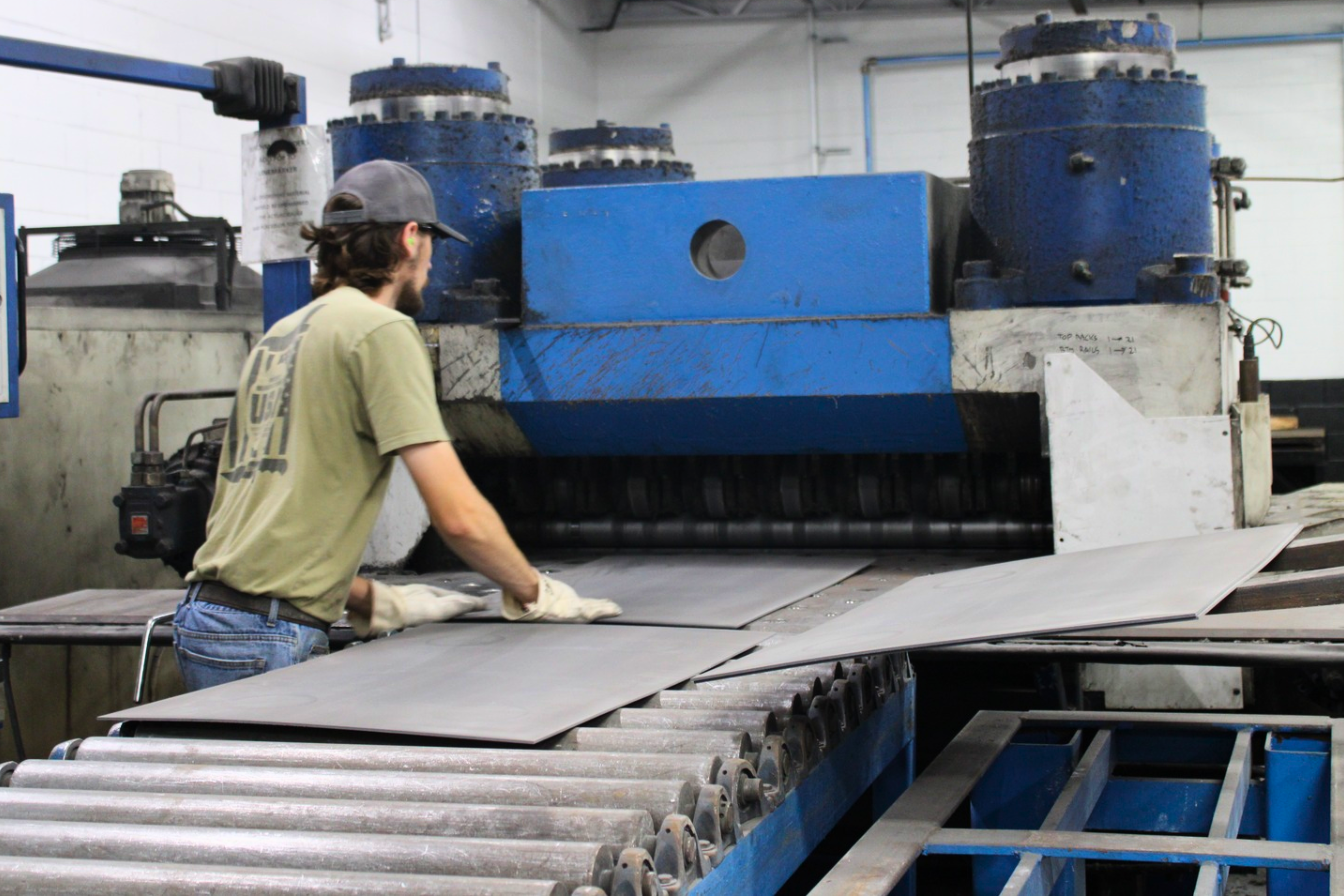
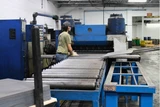
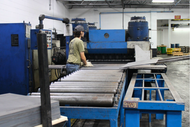
Specialty metal passes through a roller leveler at Niagara Specialty Metals to improve overall flatness and shape.
How Do Roller Leveling and Press Flattening Differ?
Roller leveling and press flattening correct different types of shape problems. They are complementary capabilities, not necessarily consecutive steps.
During roller leveling, material passes through a series of rolls that repeatedly flex it to correct overall shape. Bob describes this as a way to address broader flatness problems across the sheet or plate.
Niagara uses precision roller levelers, including the Arku and Hammerle equipment. Craig explained the purpose simply: material enters the machine unflat and exits in a more level condition. His experience also shows that proper leveling can help address stresses associated with distortion so the material is less likely to change shape during later processing.
Press flattening serves a different purpose. Rather than correcting the overall shape through multiple rolls, a press allows the operator to target a more localized distortion.
Justin describes the press as a heavy-duty flattening tool that can address specific high or low areas in thicker pieces where a roller leveler may not provide the appropriate correction. The appropriate method therefore depends on the actual shape problem rather than one flattening process being universally better than the other.
Why Do Different Materials Require Different Flattening Approaches?
Thickness, strength, hardness, alloy type, dimensions, and the type of distortion all influence how specialty metal responds to flattening.
Bob emphasizes that there is no single method that works equally well for every material.
Craig has seen that firsthand during his 27 years at Niagara. He noted that some high-strength aerospace alloys can be particularly challenging to flatten. Niagara may use different equipment or processing approaches depending on the material condition and the amount of correction required.
Material condition can matter as well. Tim and Craig both discussed situations where certain materials are flattened while still warm following heat treatment because their condition can affect how successfully the shape is corrected. This can be especially important with materials that may be more susceptible to cracking when worked in a less suitable condition.
Experienced operators must therefore evaluate the material that is actually in front of them rather than applying one setting or technique to every order.
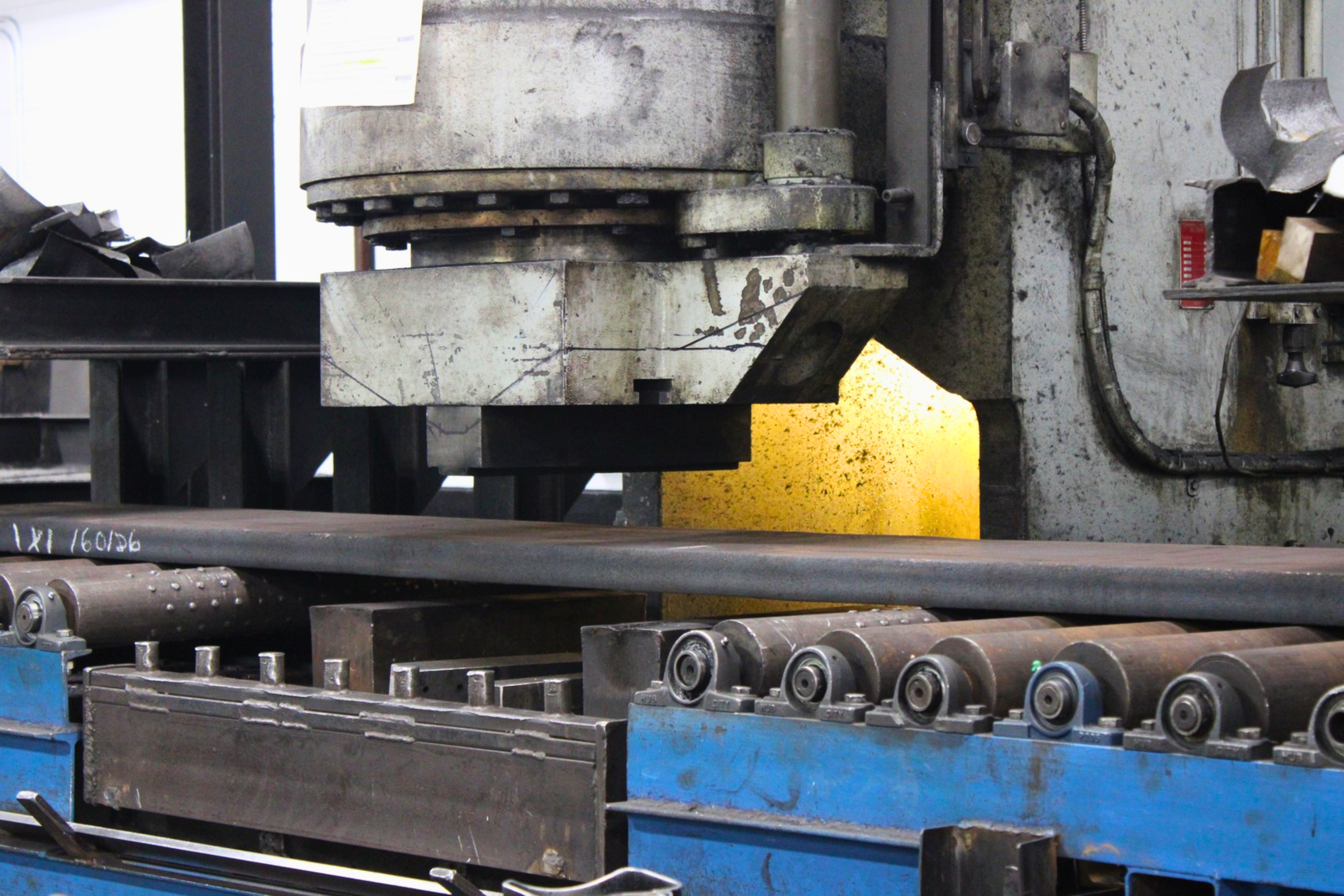
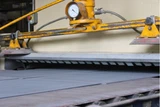
Press flattening allows Niagara to target localized distortion in specialty metal that requires a different approach than roller leveling.
How Does Flatter Material Help the Customer?
The value of plate flattening becomes most apparent when the material reaches the customer’s equipment.
Flatter sheet and plate can be easier to fixture, cut, machine, grind, form, and handle. Bob notes that improved flatness can reduce setup time, support dimensional consistency, and eliminate corrective work the customer might otherwise need to perform.
That can matter across a wide range of applications. Niagara processes materials for customers in markets including aerospace, industrial manufacturing, and cutlery, where incoming material may move directly into precise cutting or machining operations. Niagara also provides flattening for customer-supplied materials as part of its broader conversion capabilities.
The customer benefit is therefore not simply that a sheet or plate looks flatter. It is receiving material in a shape that is better prepared for the manufacturing equipment and process that will use it next.
Plate Flattening Helps Prepare Specialty Metal for What Comes Next
Plate flattening gives Niagara several ways to correct material shape based on the needs of the individual order.
Roller levelers can address broader flatness conditions across sheet and plate, while press flattening gives operators the ability to work on more localized distortion. The appropriate approach depends on the alloy, thickness, dimensions, material condition, and type of shape correction required.
Not every Niagara order requires the same flattening process, or flattening at the same point in production.
For customers, the goal is consistent: receive specialty metal with the flatness needed to move more efficiently into cutting, machining, grinding, forming, or another manufacturing operation.
About the Guests
Bob Shabala is the President and CEO of Niagara Specialty Metals. His experience across Niagara’s specialty metal processing operations gives him a broad understanding of how material moves through production and how each process supports quality, traceability, efficiency, and customer requirements. Throughout the Process Series, Bob helps explain why each operation matters and how Niagara approaches specialty metal processing from the customer’s perspective.
Craig Weyers has worked at Niagara Specialty Metals for 27 years and has experience across numerous areas of the plant, including the rolling mills, laser operations, pressing, and flattening. He has also served in mill supervision and continues to support Niagara’s production operations. His broad hands-on experience gives him a practical understanding of how specialty alloys respond to flattening and how roller leveling and press flattening can be used to address different material conditions.
Follow the Inside Niagara: Process Series and check out our YouTube channel for more content!
Looking to learn more about specialty metal processing? Check out these related blogs:
Shot Blasting: Removing Scale Before Finish Rolling
Finish Rolling: How the Sheet Mill Controls Specialty Metal Thickness
Metal Sandblasting: Surface Preparation for Specialty Sheet and Plate
For more information, check out our other blogs.
Click here to view our product catalog at our updated e-commerce store!
Interested in additional information on knife steel or CPM® MagnaCut stainless steels? Click here!