Metal Sandblasting: Surface Preparation for Specialty Sheet and Plate
Nov 9th 2026
Sandblasting helps remove residual scale, oxidation, and surface contamination from specialty sheet and plate while creating a cleaner, more uniform surface.
At Niagara Specialty Metals, sandblasting is typically used later in the manufacturing process after operations such as rolling and annealing have affected the material’s surface. Depending on the order, the sandblasted condition may prepare the material for another operation or serve as the surface condition supplied to the customer.
Unlike heavier shot blasting used earlier in certain processing routes, sandblasting provides a more controlled method of surface cleaning for material that may already be closer to its finished dimensions.
Niagara President and CEO Bob Shabala and Alex Xapsos from Niagara’s sandblasting department explain why surface preparation matters, how the process works, and what customers gain from properly descaled specialty metal.
Why Is Specialty Metal Sandblasted?
Heating and hot processing can leave oxide scale, discoloration, and other residue on the surface of specialty metals. Sandblasting removes this remaining surface material so the sheet or plate can have a cleaner condition.
Bob explains that Niagara primarily uses the process to address residual scale, oxidation, and contaminants that could interfere with later inspection, finishing, cutting, or customer processing.
Alex describes the process in practical terms: after material has been annealed, its surface may not have the appearance or cleanliness Niagara wants to deliver. Sandblasting removes that outer residue and exposes a more uniform surface underneath.
This is especially useful because annealing involves elevated temperatures that can change the appearance of the exposed surface even when the material itself is processed correctly. The purpose is not to change the chemistry or properties of the alloy. It is to address the condition of the surface after earlier manufacturing operations.
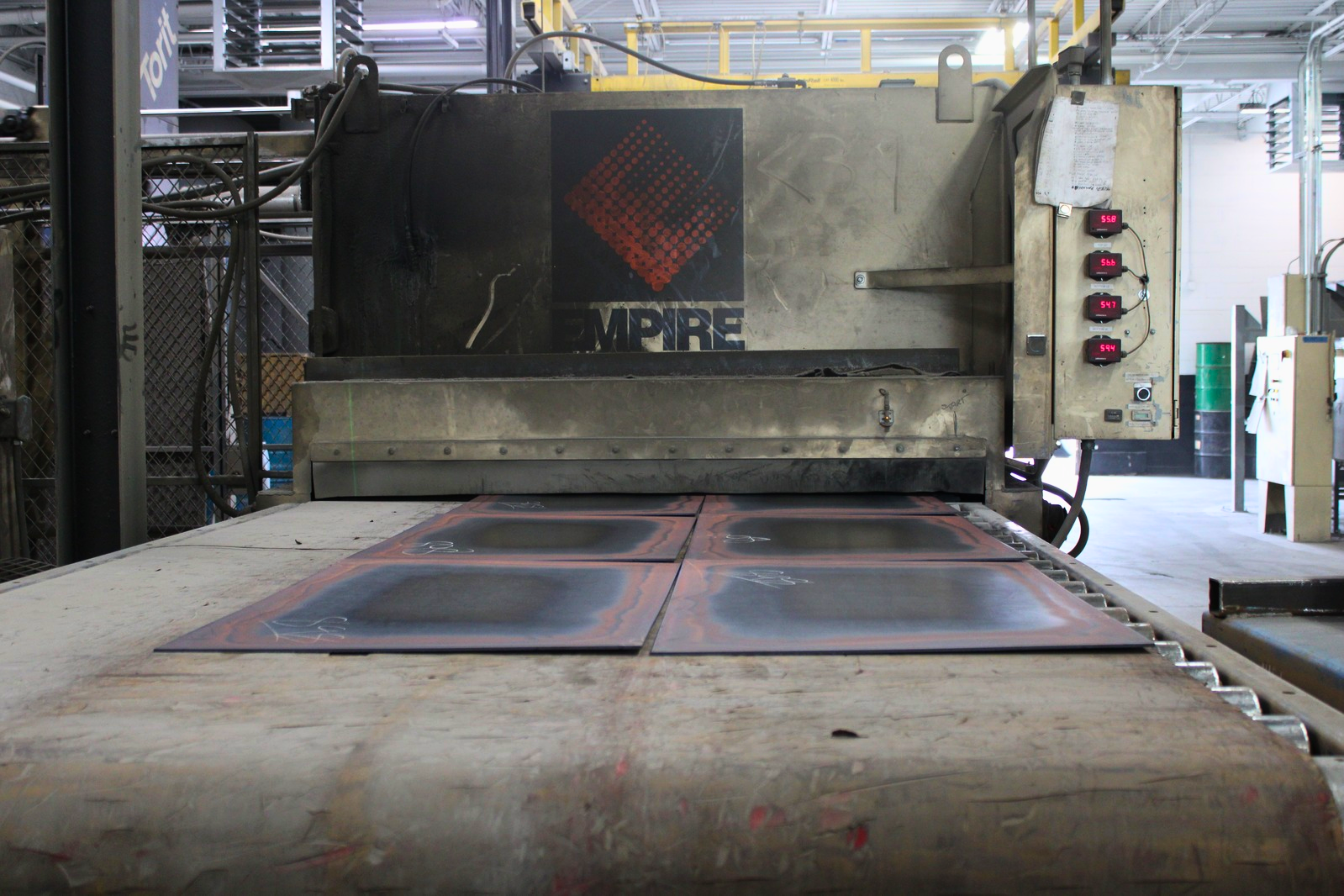
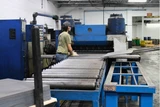
Specialty metal moves through Niagara’s sandblasting process to remove residual oxidation and surface scale.
How Is Sandblasting Different From Shot Blasting?
Although both processes use abrasive media to clean metal surfaces, sandblasting and shot blasting serve different roles within Niagara’s processing capabilities.
Shot blasting is generally the more aggressive operation. It is commonly used to remove heavier scale earlier in production, particularly when material needs additional rolling afterward.
Sandblasting is used for more controlled surface cleaning later in the process. Bob explains that this can include removing residual oxidation or contamination before finishing, inspection, cutting, or delivery.
The blasting media are also different. Niagara’s sandblasting operation uses aluminum oxide, while its shot blasting equipment uses stainless steel cut-wire media.
Justin also noted an important practical difference: thinner material can be more susceptible to distortion under an aggressive blasting process, which is one reason the appropriate surface-cleaning method depends on the material and its condition.
The choice is therefore based on where the material is in its processing route and what type of surface preparation it requires.
Why Is Aluminum Oxide Used for Sandblasting?
Aluminum oxide is an abrasive media well suited to removing oxide, scale, and surface contamination from metal. As the abrasive strikes the material, it mechanically removes unwanted surface residue and leaves behind a more consistent matte appearance.
That matches what Niagara operators see in production. Tim Gelnett described the resulting surface as a consistent gray finish, while Justin noted that the process can remove the visible heat marks and oxidation left from annealing.
Aluminum oxide is also widely used for industrial abrasive blasting and metal surface preparation. Washington Mills identifies applications including cleaning, scale removal, and related surface-preparation work.
For Niagara, the important point is the result: a controlled abrasive-cleaning process suited to specialty sheet and plate without relying on the more aggressive action used during shot blasting.
How Does Niagara Create a Consistent Sandblasted Surface?
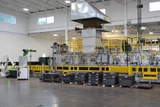
Niagara uses both manual and automated sandblasting equipment to process specialty sheet and plate.
Alex explained that the material moves through the blasting equipment while abrasive is directed at both sides of the sheet. Niagara has also introduced an automated robot that can load, process, and restack standard sheet products with less manual handling.
That evolution matters because surface consistency depends on more than simply putting abrasive on the metal. Operators monitor the equipment and resulting surface condition to make sure the process is performing as expected.
Alex specifically watches equipment condition and operating indicators because worn components or changes in the abrasive-delivery system can affect how effectively the sheet is cleaned. The important result is repeatable surface preparation across the material rather than the details of the equipment producing it.
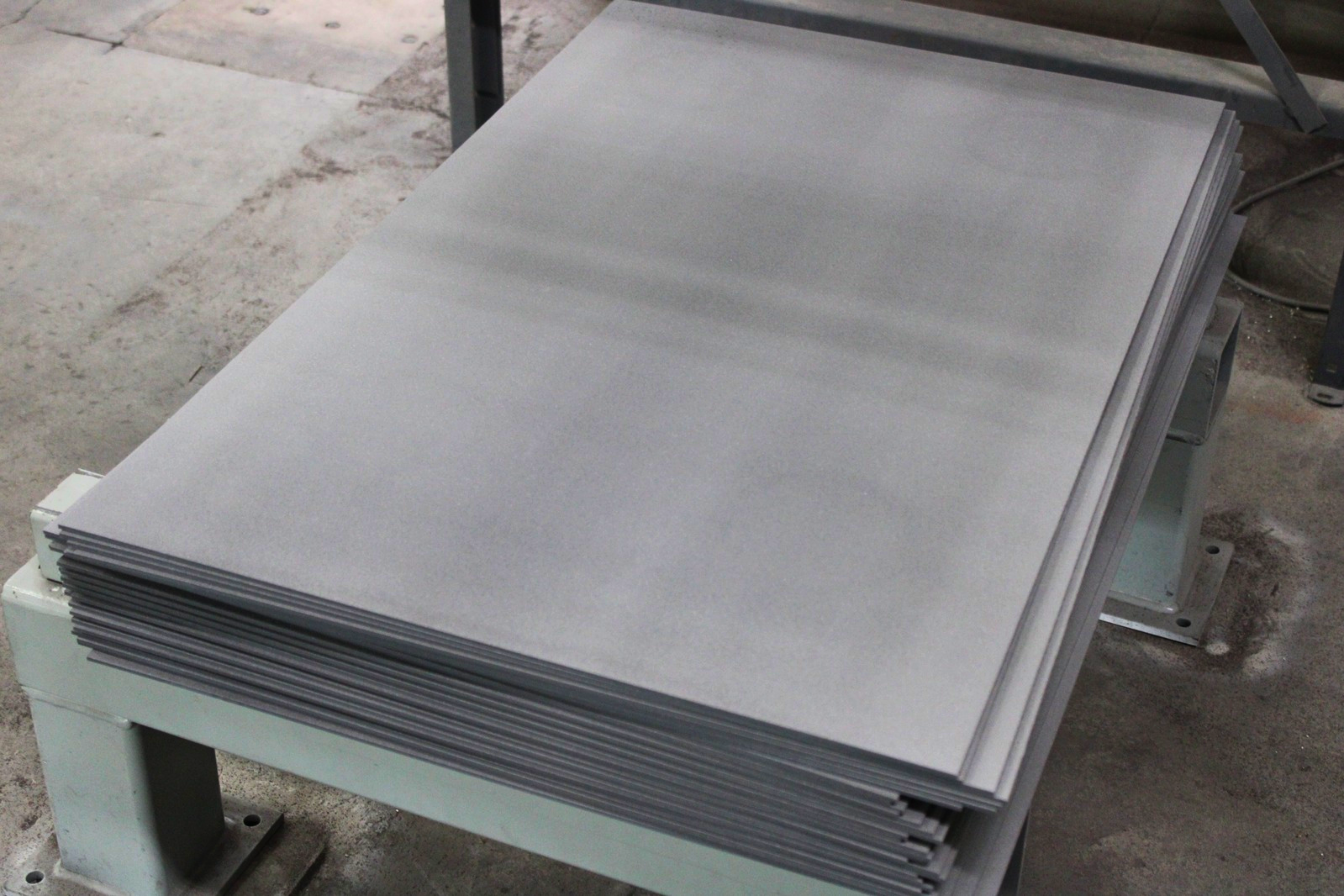
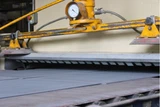
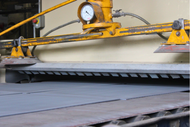
Sandblasting leaves specialty metal with a clean, uniform gray surface after residual scale and oxidation are removed.
What Does a Sandblasted Surface Mean for the Customer?
A sandblasted surface gives customers specialty metal that is cleaner and easier to evaluate or process than material still carrying residual scale and oxidation.
Depending on the order, the material may continue into cutting, inspection, or another finishing operation. For some sheet products, sandblasting can also provide the descaled gray surface condition in which the material is supplied.
Bob also emphasizes that surface cleanliness can matter to the customer’s own manufacturing. Residual scale or contamination can interfere with subsequent operations, while a clean surface gives the customer a more consistent material condition to begin with.
The benefit is not simply appearance. Proper surface preparation helps keep unwanted scale and oxidation from becoming the customer’s problem later.
Sandblasting Completes an Important Part of Surface Preparation
Metal sandblasting gives Niagara a controlled way to remove residual scale, oxidation, and contamination from specialty sheet and plate later in the manufacturing process.
It serves a different role than shot blasting and is selected based on the material’s thickness, condition, and required surface finish.
For some orders, the sandblasted material will continue into another Niagara operation. For others, the uniform gray descaled surface may be the condition the customer receives.
In either case, sandblasting helps ensure that surface condition is addressed before the material moves into its next manufacturing step.
About the Guests
Bob Shabala is the President and CEO of Niagara Specialty Metals. His experience across Niagara’s specialty metal processing operations gives him a broad understanding of how material moves through production and how each process supports quality, traceability, efficiency, and customer requirements. Throughout the Process Series, Bob helps explain why each operation matters and how Niagara approaches specialty metal processing from the customer’s perspective.
Alex Xapsos works in Niagara Specialty Metals’ sandblasting operation and has several years of experience with the company, including previous temporary work before joining full-time. He studied mechanical and aerospace engineering at the University at Buffalo and has continued graduate study in materials design and innovation. His combination of engineering education and hands-on production experience gives him a practical understanding of abrasive surface preparation, equipment performance, and the importance of creating a consistent finished surface.
Follow the Inside Niagara: Process Series and check out our YouTube channel for more content!
Looking to learn more about specialty metal processing? Check out these related blogs:
Metal Annealing Process: Why It Matters for Specialty Alloys
Shot Blasting: Removing Scale Before Finish Rolling
Finish Rolling: How the Sheet Mill Controls Specialty Metal Thickness
For more information, check out our other blogs.
Click here to view our product catalog at our updated e-commerce store!
Interested in additional information on knife steel or CPM® MagnaCut stainless steels? Click here!