Hot Rolling Process: How the Plate Mill Shapes Specialty Metals
Oct 12th 2026
The hot rolling process transforms a thick specialty metal billet into plate or intermediate material for further processing. At Niagara Specialty Metals, the plate mill operation can include heating the material, progressively reducing it through the rolling mill, preliminary leveling, and shearing based on the requirements of the order.
For many orders that require hot rolling, the plate mill follows billet preparation. The material is heated and progressively reduced as it moves through the rolling mill, developing greater length and width as its thickness decreases.
For customers, this step matters because decisions made during hot rolling can affect any downstream processing the customer’s order requires. Niagara President and CEO Bob Shabala and Plate Mill Supervisor Eric Eick explain how material behavior, temperature, shape, and operator experience all contribute to consistent downstream processing.
What Does the Hot Rolling Process Accomplish?
The hot rolling process begins converting a thick billet into plate or an intermediate blank that can continue through production. This breakdown stage is also known as cogging.
For orders requiring hot rolling, the prepared material moves to the plate mill. Before rolling begins, the billet is heated to the working condition required for its alloy. Proper temperature is important because specialty metals respond differently during hot working, and the material must be in the right condition to reduce successfully through the mill.
The material then travels repeatedly through the rolls. Each pass gradually reduces its thickness while allowing its length and width to develop.
Bob explains that “cogging is where we begin converting a thick billet into plate.”
The goal is not simply to make the billet thinner. The plate mill team must develop the material toward the dimensions required for the next production stage while maintaining its identity and usable condition.
Depending on the order, material may be finished as plate at this stage or continue into additional processing such as annealing, surface preparation, or finish rolling in the sheet mill.
For orders that require additional processing, the plate mill establishes the shape and condition needed for the operations that follow.
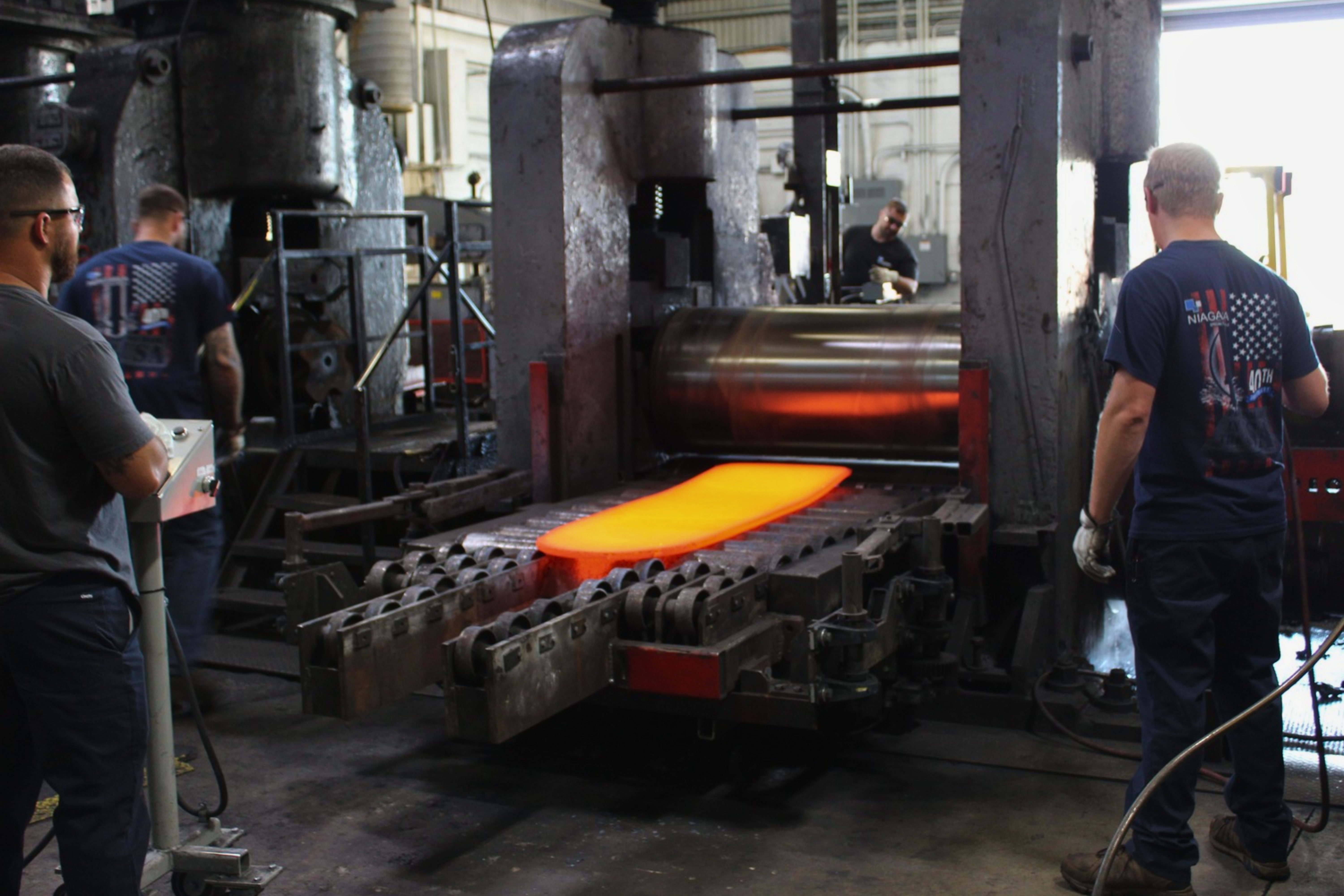
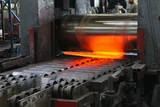
A heated specialty metal plate moves through the plate mill during the hot rolling process at Niagara Specialty Metals.
Why Do Specialty Alloys Require Controlled Hot Rolling?
Specialty alloys do not all respond to hot rolling in the same way. Material grade, starting condition, dimensions, and temperature all influence how the billet behaves as it is reduced.
Bob explains that “specialty alloys can’t always tolerate large reductions at once.”
Instead of trying to reach the required dimensions in one movement, the plate mill team progressively reduces the material while monitoring how it responds. This helps manage shape and material behavior while reducing the risk of cracking, uneven reduction, or other conditions that could affect the order.
Eric Eick’s years of experience on the plate mill are especially valuable here. Operators learn how different grades behave and recognize when material is responding differently than expected.
For customers, that experience means the rolling approach can be matched to the material rather than forcing every specialty alloy through the same process.
What Are Plate Mill Operators Monitoring?
During rolling, operators monitor temperature, thickness, width, shape, surface condition, and the way the material responds during each pass.
They watch for conditions such as cracking, uneven reduction, or changes in shape that may require attention before processing continues.
Surface condition is also important. Heating can create scale, and loose scale must be managed so it does not interfere with the material during rolling.
Traceability remains important as well. Even though heating and rolling can dramatically change the appearance of the original billet, the material must remain connected to the correct grade and order.
Together, physical monitoring and material identification help the team keep each order within its required processing route.
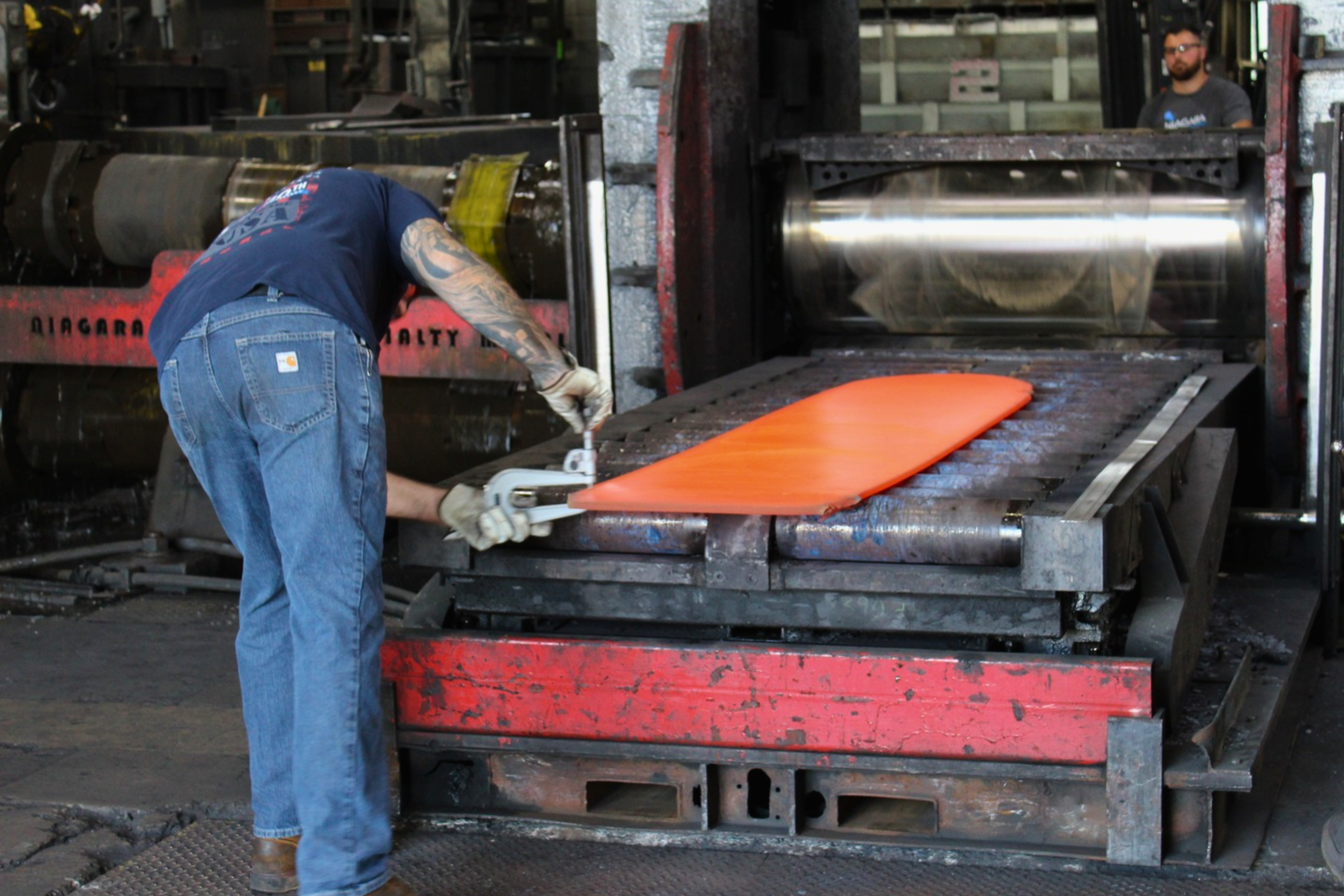
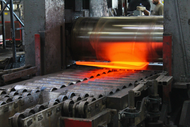
Plate mill operator monitoring a heated specialty metal plate as it moves through the rolling mill.
What Do Leveling and Shearing Accomplish After Rolling?
Rolling develops the plate’s thickness, width, and overall shape, but material does not always leave the mill perfectly flat or at the exact length needed for the next operation.
When required, the rolled material moves through a leveler to reduce bends and waves and create a more manageable, consistent shape. This preliminary leveling helps prepare the material for measurement, handling, and cutting.
The material can then move to the shear, where it is trimmed or divided into the intermediate blanks required for the order.
Shearing also supports material utilization. The goal is to create the required blanks while making efficient use of the rolled material.
Leveling and shearing help turn the newly rolled plate into material that is better prepared for whatever processing the customer’s order requires next.
Hot Rolling Shapes Specialty Metal for the Customer’s Requirements
The plate mill does more than reduce the thickness of a billet. Heating prepares specialty metal for hot working, controlled rolling develops its dimensions, and leveling and shearing can prepare the rolled material for the next required stage.
Different alloys respond differently throughout the process, making experienced operators and careful monitoring important from the furnace through the final plate mill operations.
What happens afterward depends on the customer’s order. Some material may be finished as plate, while other orders may continue into annealing, additional rolling, surface preparation, or another finishing process.
Together, these plate mill operations help convert a thick billet into usable specialty metal prepared for its intended manufacturing route.
About the Guests
Bob Shabala is the President and CEO of Niagara Specialty Metals. His experience across Niagara’s specialty metal processing operations gives him a broad understanding of how material moves through production and how each process supports quality, traceability, efficiency, and customer requirements. Throughout the Process Series, Bob helps explain why each operation matters and how Niagara approaches specialty metal processing from the customer’s perspective.
Eric Eick has worked at Niagara Specialty Metals for 17 years and serves as Plate Mill Supervisor. Before moving into his supervisory role, he spent several years working directly on the plate mill. His hands-on experience gives him an understanding of how different specialty alloys behave during hot rolling, how material identification is maintained throughout the operation, and what the team must monitor as each order moves through the mill.
Follow the Inside Niagara: Process Series and check out our YouTube channel for more content!
Looking to learn more about specialty metal processing? Check out these related blogs:
Billet Saw Cutting: Why the First Step Matters
Rolling Forward: How Niagara Specialty Metals Powers High-Performance Industries
How Niagara Produces Aerospace Grade Specialty Steel with Precision
For more information, check out our other blogs.
Click here to view our product catalog at our updated e-commerce store!
Interested in additional information on knife steel or CPM® MagnaCut stainless steels? Click here!