Powder Metallurgy Knife Steel: What Actually Matters
Aug 3rd 2026
Powder metallurgy knife steel helped the cutlery industry reduce traditional tradeoffs between toughness, edge retention, corrosion resistance, hardness, and grindability. It did not create one perfect steel. Instead, it gave alloy designers a better starting point and allowed the industry to push performance further.
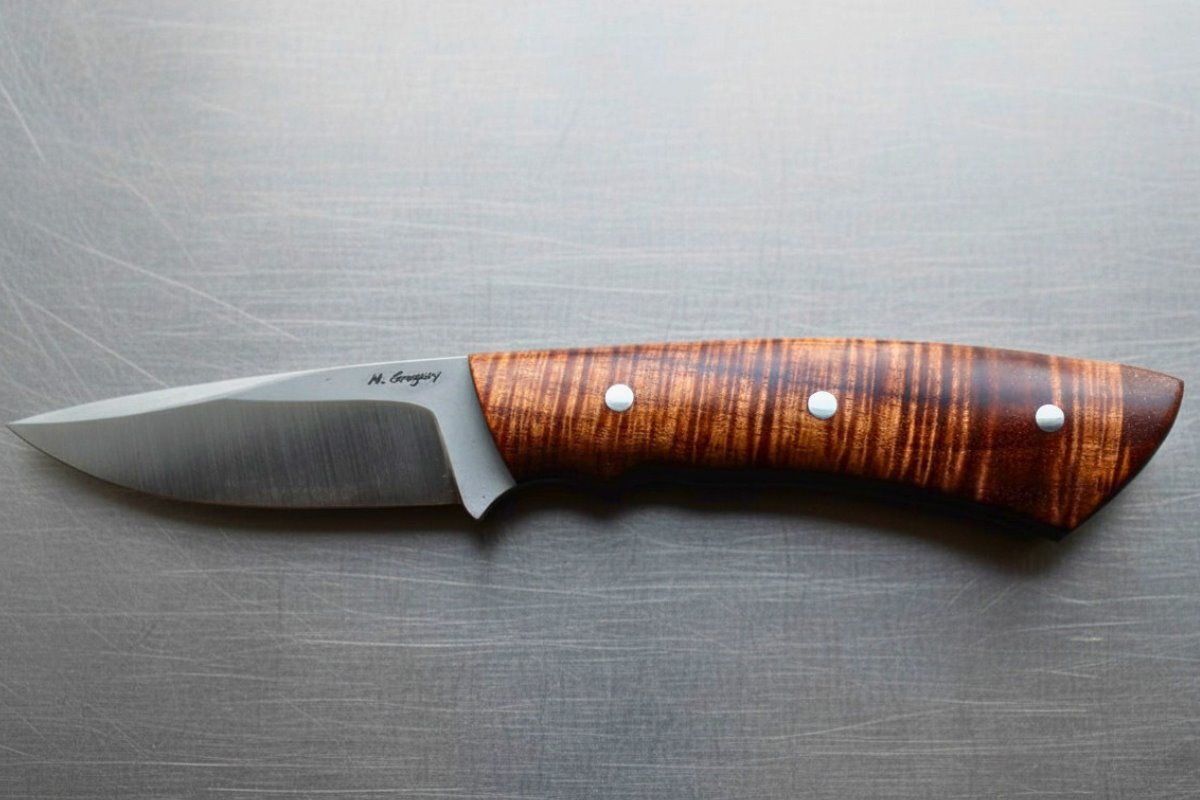
Knife performance depends on the balance between edge retention, toughness, corrosion resistance, heat treatment, and edge geometry.
Carl Stroud has spent 36 years in the specialty steel industry. His work has included high-performance materials for aerospace, engine bearings, oil exploration, industrial tooling, and cutlery. Across those industries, engineers and business owners often ask the same question: What steel is newer or better for the application?
Knife makers ask that question too. In this presentation, Carl explains how powder metallurgy changed steel development, what controls real knife performance, how MagnaCut and MagnaMax® improved alloy balance, and how the full supply chain turns metallurgical progress into better knives.
Why Every Knife Steel Requires Tradeoffs
Every knife steel represents a balance of properties. Increasing one property often creates a compromise somewhere else.
Carl once asked a knife manufacturer which property he would improve first: edge retention, toughness, or stain resistance. The owner answered, “Yes.” That answer captures the knife maker’s wish list. Makers do not want only one strong property. They want all of them.
However, traditional metallurgy forced designers to make choices. Higher wear resistance often reduces toughness. Higher hardness could create grinding and finishing challenges. Better corrosion resistance could also require other compromises.
As Dr. Larrin Thomas often explains through Knife Steel Nerds, “Engineering is all about tradeoffs.” Therefore, the important story is not that the steel industry eliminated tradeoffs. Instead, the industry gradually reduced them.
This balance also depends on the application. A chef’s knife, everyday carry folder, and hard-use fixed blade do not need the same properties. Each knife requires a different combination of toughness, wear resistance, corrosion resistance, hardness, and grindability.
The goal has remained the same. Knife makers want better performance. The metallurgy has evolved to move them closer to that goal.
How Powder Metallurgy Changed Steelmaking
Powder metallurgy improved knife steel by reducing segregation, refining carbide size, and creating a more uniform structure. These changes made richer alloy designs more practical and consistent. The problem was not a lack of ideas from metallurgists. Instead, conventional manufacturing created physical limits.
In traditional steelmaking, producers pour molten steel into large ingot molds. As the steel solidifies, it can form shrinkage cavities, inclusions, alloy segregation, and large carbide structures. Higher alloy contents can make these problems worse. They can also create workability problems inside the ingot.
As a result, the steelmaking process limited what alloy designers could manufacture reliably. Powder metallurgy uses a different path. The process still begins with molten steel. However, high-pressure inert gas atomizes the liquid steel into tiny droplets.
Those droplets cool rapidly and become powder particles. Producers then collect and screen the powder. Next, they seal it inside steel containers called cans, which resemble large gas cylinders.
The producer then uses hot isostatic pressing, or HIP, to consolidate the powder under heat and pressure. The consolidated material can then become a forged billet.
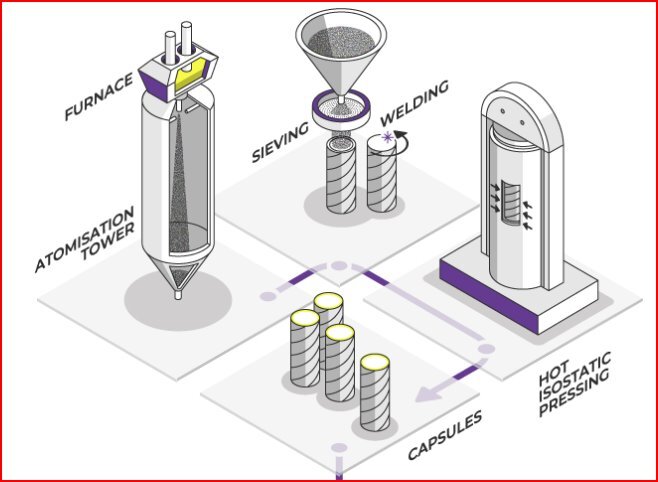
The powder metallurgy process uses gas atomization, rapid solidification, powder collection, and HIP consolidation to produce forged billet.
Each powder particle acts like a miniature ingot. Because it is very small and solidifies quickly, it does not develop the same large-scale alloy segregation found in conventional ingot casting. Each particle also contains the intended chemistry.
This process creates smaller carbides, better carbide distribution, reduced segregation, and improved consistency.
Carl used the familiar comparison between conventional D-2 and CPM® D2 to show this change. Conventional D-2 can show large and uneven carbides. CPM® D2 shows a smaller and more uniform carbide structure.
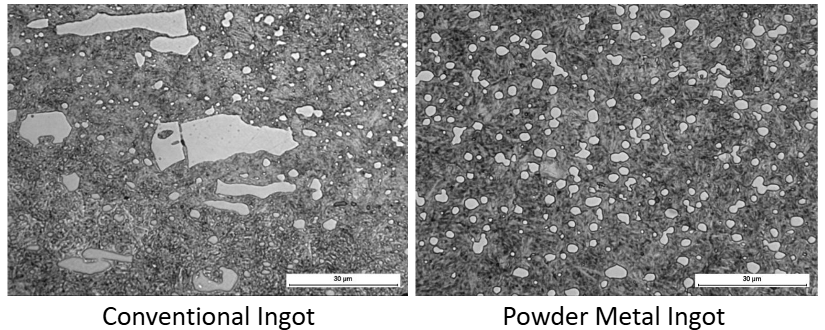
Powder metallurgy creates smaller carbides, a more uniform distribution, reduced segregation, and improved consistency.
Powder metallurgy did not remove every compromise. However, it gave steel designers a far better starting point. Higher alloy contents and richer chemical combinations became more practical to manufacture.
How Powder Metallurgy Expanded Alloy Performance
Powder metallurgy allowed steel designers to challenge performance limits that once appeared fixed. CPM® 3V became an early example of how the process could improve toughness and wear resistance together.
Before powder metallurgy changed expectations, steels such as A-2, D-2, and S-7 had familiar positions. Carl remembers selling those grades while working at Latrobe Steel. Buyers understood which steels offered greater toughness and which offered greater wear resistance.
Then CPM® 3V entered the market.
CPM® 3V offered toughness approaching S-7 while maintaining wear resistance beyond D-2. That combination caught the attention of the tool steel industry.
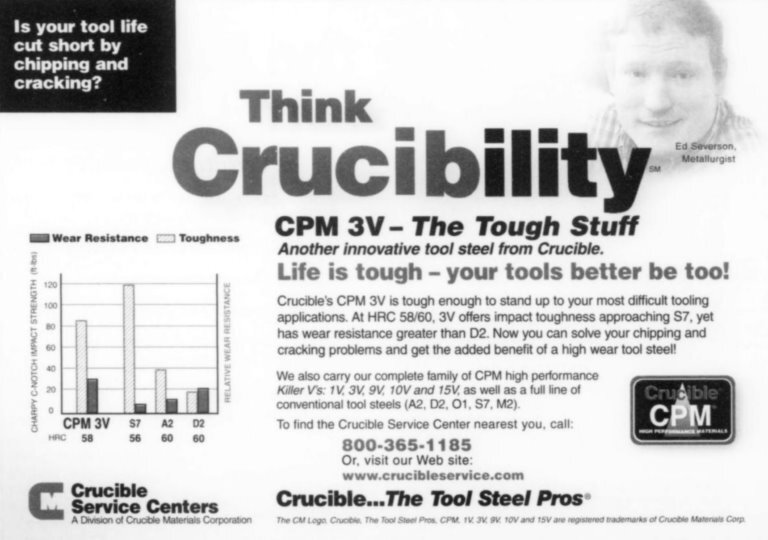
CPM® 3V challenged traditional expectations by offering toughness approaching S-7 with wear resistance greater than D-2.
It did not eliminate the toughness and wear resistance tradeoff. Instead, it shifted the boundary. After that, the industry began asking how far powder metallurgy could go. Grades such as CPM® 9V and CPM® 10V used greater vanadium carbide content to deliver higher wear resistance.
However, the same tradeoff remained. As wear resistance increased, toughness declined.
The industry also wanted powder metallurgy performance in stainless knife steels. Knife makers valued the performance of PM tool steels, but they also wanted better stain resistance for everyday carry knives, hunting knives, and kitchen knives.
That demand led to continued development of CPM® S30V and CPM® S35VN. Later grades such as CPM® S90V, CPM® S110V, and CPM® S125V pushed wear resistance further.
Yet those gains still came with limits. Carl noted that some of the higher-wear stainless grades had toughness levels similar to D-2.
Each new steel taught the industry more about wear resistance, toughness, corrosion resistance, and manufacturability. The industry was not finding a perfect steel. It was learning how to reduce the compromises.
What Actually Determines Knife Performance
Knife performance depends on steel, heat treatment, edge geometry, edge stability, and the intended use. Steel matters, but it never works alone.
Carl explained that carbides become part of the cutting edge. At the edge, those carbides form small cutting teeth. When a user resharpens the knife, the process exposes fresh carbides.
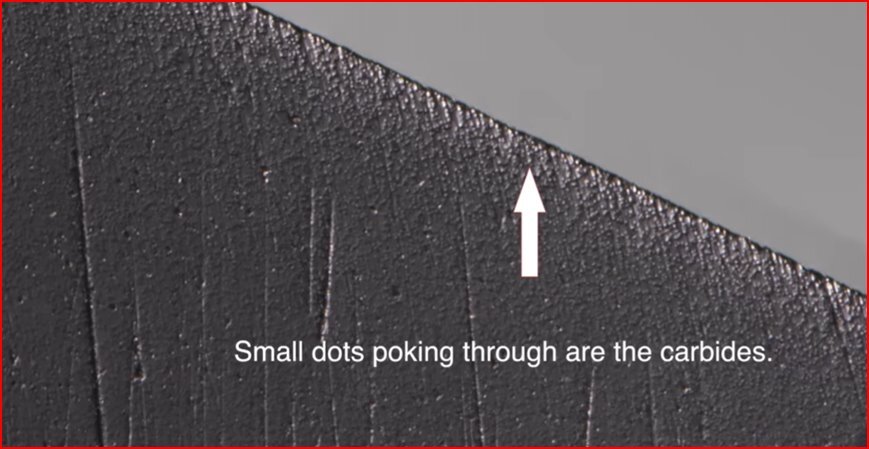
Carbides contribute to cutting action, but steel, heat treatment, blade design, and edge geometry must work together.
This is where metallurgy becomes real for the user. Carbide structure affects edge retention and edge stability. However, the steel grade does not determine the final result by itself.
Heat treatment also matters. Proper heat treatment helps the steel reach its intended properties.
Edge geometry can have an equally significant effect. A maker can use the same steel in two knives and still get very different performance because of heat treatment, blade design, and geometry.
Therefore, steel selection must always return to the application. A chef’s knife may prioritize a different edge and property balance than an everyday carry folder. A hard-use fixed blade may require another balance.
Consumers do not buy carbide structures. They buy performance. They care whether the knife cuts, stays sharp, resists corrosion, and holds up during its intended use.
That practical standard is what turns metallurgy into a useful knife.
How MagnaCut and MagnaMax® Improved the Balance
CPM® MagnaCut and MagnaMax® represent the latest effort to improve one property without giving up too much of another. Both steels build on a better understanding of carbide chemistry and corrosion resistance.
For years, knife makers valued steels such as D-2 and CPM® 3V for toughness and edge performance. However, many still wanted better stainless performance.
Traditional thinking often connected higher chromium content with better corrosion resistance. The challenge was that much of the chromium could become tied up in chromium carbides. Chromium inside carbides cannot protect the surrounding steel matrix from corrosion.
CPM® MagnaCut used a different design approach. Instead of simply adding more chromium, the alloy chemistry was balanced so vanadium and niobium formed most of the hard carbides. Those carbides support wear resistance. At the same time, more chromium remains dissolved in the steel matrix, where it can support corrosion resistance.
The key was not only adding more alloy. It was using the alloy more efficiently.
CPM® MagnaCut gained attention because it substantially improved corrosion resistance while maintaining an excellent balance of toughness and edge retention.
MagnaMax® takes another step in the same development path. It pushes edge retention further while maintaining excellent toughness and corrosion resistance.
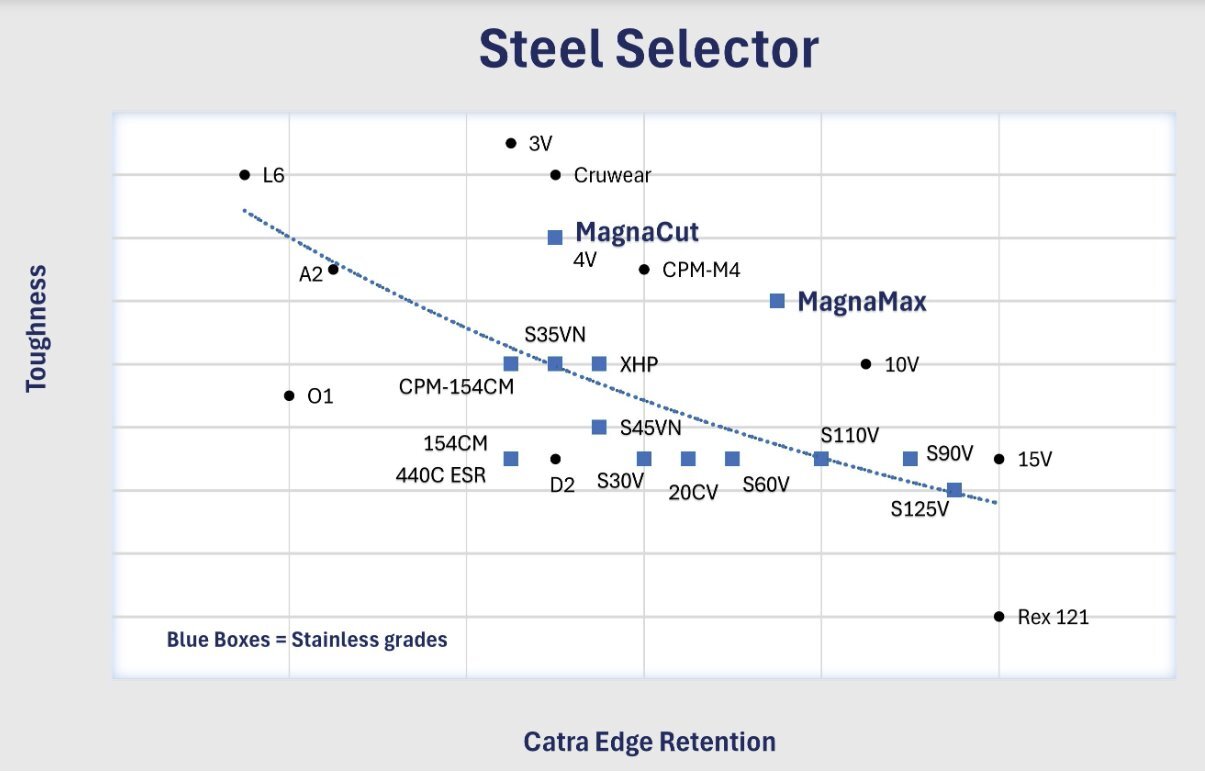
CPM® MagnaCut and MagnaMax® continue the effort to improve toughness, edge retention, and stain resistance while reducing traditional tradeoffs.
Still, Carl’s main point was not about promoting one individual grade. CPM® MagnaCut and MagnaMax® show that the industry continues working on the same engineering challenge.
Each new generation of steel attempts to improve one property without giving up another. Each generation moves closer to the knife maker’s full wish list.
How Innovation Reaches the Knife Maker
Steel innovation only matters when the industry can convert it into material that knife makers can use. That requires an entire ecosystem.
Steel designers create new alloy concepts. Powder producers manufacture the powder. Mills consolidate the powder into billet. Processors turn the billet into usable material. Heat treaters unlock the steel’s potential. Finally, knife makers turn that work into products people want to own and use.
Niagara Specialty Metals serves one part of that process. Niagara does not claim to have invented powder metallurgy or the steel itself. Its role begins when the company receives billet from the powder producer.
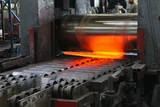
Niagara rolls that billet into precision sheet and plate on two rolling mills. The company then processes the material into strips, laser-cut blanks, waterjet parts, titanium products, and other forms customers need to build knives.
Niagara also invests in inventory, lasers, and grinding equipment. New steel cannot change the knife industry while it sits unavailable in a mill warehouse. The company supports knife makers through flexible order sizes, processing capabilities, technical knowledge, inventory, and supply chain support.
Niagara is also a 100% employee-owned company. For more than 30 years, its team has worked with specialty alloys, powder metallurgy steels, and titanium. That experience supports a simple goal: move innovation from billet form into the hands of the people who can turn it into a great knife.
Conclusion
Powder metallurgy knife steel changed the cutlery industry by giving alloy designers better control over chemistry, carbide size, distribution, and consistency. It allowed the industry to challenge old limits in toughness, wear resistance, corrosion resistance, and alloy design.
Still, no steel works perfectly in every knife. Steel, heat treatment, edge geometry, processing, and intended use must work together.
CPM® 3V, higher-wear PM grades, stainless PM steels, CPM® MagnaCut, and MagnaMax® all represent steps in the same development path. Each one attempts to improve performance while reducing traditional compromises.
The consumer ultimately benefits from this progress. Today’s knife users have access to better performance, greater reliability, more choices, and better knives.
That is what actually matters. The purpose of every steelmaking, processing, heat treatment, and knife-making step is to build a knife that performs when someone needs it.
About the Guest
Carl Stroud has 36 years of experience in the specialty steel industry. His career has included materials used in aerospace, engine bearings, oil exploration, industrial tooling, and cutlery. He serves as Sales Manager at Niagara Specialty Metals.
Looking to learn more about powder metallurgy knife steel? Check out these related blogs:
Erasteel Powder Metallurgy Steels: A Global Leader in Clean Steel
Erasteel Technical Steel Expert Bob Skibitski Shares His Journey in Powder Metallurgy
Powder Metallurgy vs Conventional Steel: What’s the Difference?
For more information, check out our other blogs.
Click here to view our product catalog at our updated e-commerce store!
Interested in additional information on powder metallurgy steel? Click here!