Heat Treating Knife Steel: Why the Process Matters
Aug 24th 2026
Why Heat Treating Knife Steel Is More Than Just Heating Steel
Heat treating knife steel is not a generic process. Every steel grade requires specific temperatures, timing, cooling methods, and quality controls to achieve the desired performance.
Many knife makers focus on blade design, grinding, and handle construction. However, the heat treatment process often determines whether a blade reaches its full potential. During a recent interview with Peters’ Heat Treating Inc., Blade Division Manager Trevor Kaplin and President/ Owner Andrew Wilkosz explained why heat treating requires far more precision than many people realize.
In this article, you'll learn why heat treatment is critical, how cryogenic processing fits into modern blade manufacturing, and why experienced thermal processors play such an important role in producing high-performance knives.
Quick Answer
Heat treating knife steel requires much more than simply heating and cooling a blade. Different steel grades require unique thermal processing schedules, cryogenic treatments, tempering cycles, and quality controls. Professional heat treaters use specialized equipment, documented procedures, and metallurgical expertise to achieve the hardness, toughness, and performance knife makers expect.
Why Heat Treating Knife Steel Is Not a One-Size-Fits-All Process
Heat treating knife steel requires a process tailored to the specific alloy and desired result.
According to Trevor Kaplin, one of the biggest misconceptions in the industry is the belief that heat treating is a generic operation that can be applied the same way to every steel. In reality, Peters’ Heat Treating has processed more than 200 different steel grades over the years, each with its own requirements.
A steel grade alone does not determine the final process. Hardness targets, geometry, intended use, and customer expectations all influence the thermal cycle. As Trevor explained, every order undergoes a process review with strict guidelines before entering production.
This attention to detail matters because even small variations in processing can affect final blade performance. For knife makers, the viable takeaway is simple: selecting a premium steel is only part of the equation. The heat treatment process must match the material.
Why Cryogenic Processing Has Become Standard for Blade Heat Treatment
Cryogenic processing helps improve consistency and complete important metallurgical transformations.
When discussing modern knife steels such as CPM® MagnaCut and MagnaMax™, Niagara Specialty Metals’ Sales Manager Carl Stroud asked whether Peters’ incorporates cryogenic processing into its blade operations. Trevor's answer was straightforward: every blade order receives cryogenic processing.
Certain steels require cryogenic treatment to achieve complete transformation. However, Peters’ found benefits across a wide range of materials, including simpler carbon steels. As a result, cryogenic processing has become part of their standard blade workflow.
This approach allows the company to refine a reliable process while providing customers with consistent results. Andrew Wilkosz also explained that Peters' experience across aerospace, automotive, tooling, and cutlery markets helped expand its understanding of cryogenic applications.
The takeaway is that cryogenic processing is no longer viewed as an exotic option. Instead, it has become a valuable tool for achieving high-quality, repeatable blade performance.
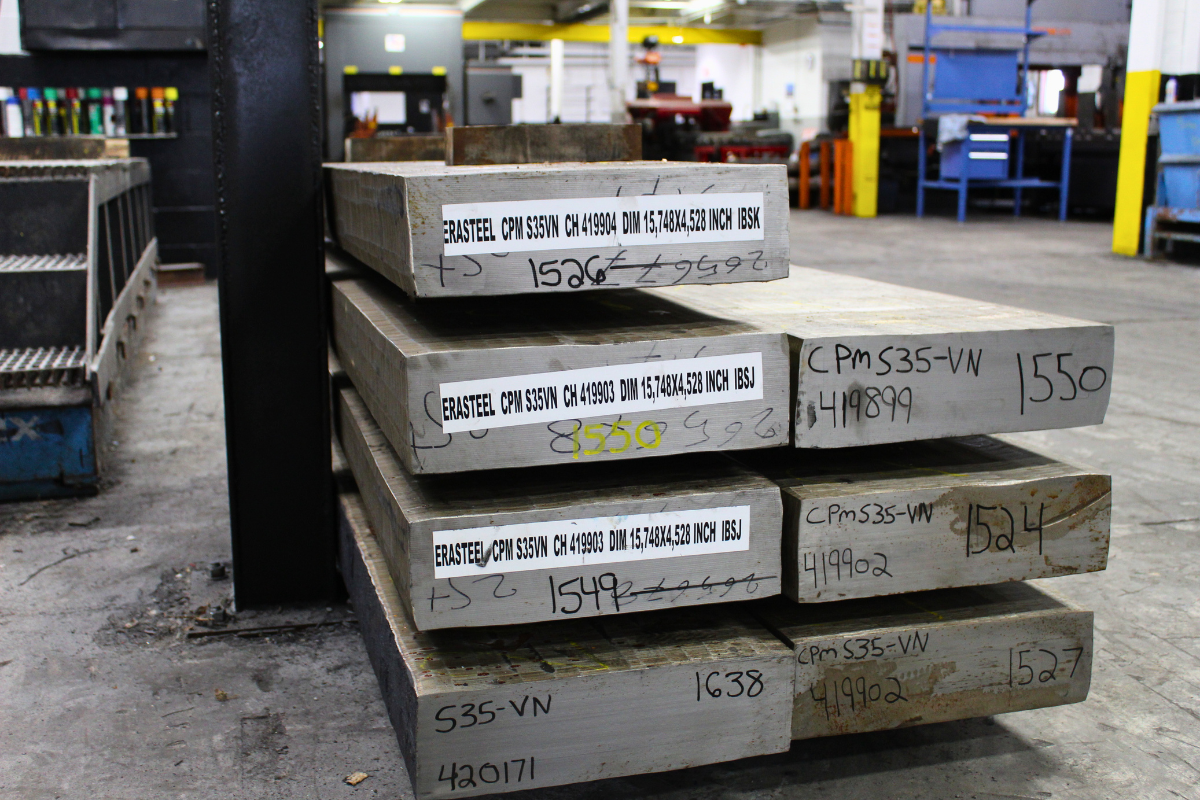
The steel selected for a knife is only part of the equation. Proper heat treatment helps unlock the performance potential built into premium grades like Erasteel S35VN.
Why Commercial Heat Treaters Bring Specialized Expertise
Commercial heat treaters exist because thermal processing requires equipment, experience, and repeatability.
Many knife makers understand the target hardness they want, but they may not know the exact process required to achieve it. Trevor explained that Peters’ regularly works with customers who simply specify a steel grade and desired hardness. From there, the blade division develops the appropriate thermal process.
The blade division specializes exclusively in cutlery work. In fact, several team members are knife makers themselves. This gives them practical insight into the challenges customers face.
Trevor also noted that blade customers benefit from the same NADCAP-certified furnace systems used for industries with extremely demanding quality requirements. Those standards help create consistent thermal processing procedures and reliable outcomes.
Additionally, Peters’ operates furnaces of various sizes, allowing both small and large batches to be processed efficiently. If an unusual alloy arrives, a formal material review process evaluates technical data before processing begins.
For knife makers, this expertise reduces uncertainty and increases confidence that the finished blade will perform as intended.
The Science and Art Behind Successful Heat Treatment
Heat treatment is rooted in science, but experience still matters.
Carl Stroud asked where the line exists between science and art in thermal processing. Trevor explained that the science governs temperatures, timing, and metallurgical transformations. The art comes from understanding how specific blade geometries behave during processing.
Blade shape, grind geometry, hole placement, and thickness can all influence distortion during heat treatment. Experienced operators learn to anticipate potential issues and take corrective actions before problems occur.
Documentation also plays a major role. Peters’ scans incoming jobs, photographs parts, records setups, and tracks processing information. This documentation helps operators learn from previous jobs and improve future outcomes.
Andrew expanded on this point by describing Peters' extensive digital footprint. The company can review historical processing data, furnace records, thermal charts, oil temperatures, agitator speeds, and other variables when investigating results.
Therefore, successful heat treatment combines scientific process control with years of accumulated experience. Neither works as effectively without the other.
Why Communication Is Often the Most Important Part of the Process
Clear communication helps ensure successful heat treatment outcomes.
While discussing challenges, Andrew noted that communication may be one of the biggest hurdles in manufacturing. Customers must clearly communicate expectations, production volumes, and performance goals.
A single prototype blade may require a different approach than a production run of thousands of parts. By discussing requirements early, thermal processors can select the most appropriate methods and avoid surprises later.
This collaborative approach allows heat treaters to become solution providers rather than simply service providers.
Conclusion
Heat treating knife steel requires far more than heating and cooling a blade. Every steel grade has unique requirements, and achieving consistent performance demands specialized equipment, documented procedures, cryogenic processing capabilities, and experienced operators.
The discussion with Peters’ Heat Treating highlights why thermal processing remains a critical step in knife manufacturing. Whether a maker is working with CPM® MagnaCut, MagnaMax™, CPM® S30V, or another premium alloy, proper heat treatment helps unlock the performance built into the steel.
By combining metallurgical science, process control, and practical experience, professional heat treaters help ensure that knife makers receive blades that perform as expected in the field.
About the Guests
Trevor Kaplin serves as Blade Division Manager at Peters’ Heat Treating Inc. and has worked with the company for nearly eight years. He specializes in cutlery heat treatment and oversees blade processing operations.
Andrew Wilkosz is the President/ Owner of Peters’ Heat Treating Inc. and represents the second generation of family leadership within the company. He works across multiple industries, including aerospace, automotive, tooling, and cutlery thermal processing.
Looking to learn more about heat treating knife steel or steel science? Check out some of our related blogs here:
Peters’ Heat Treating: From a Small Garage Shop to a World-Class Thermal Processor
Steel Performance Testing: Hardness, Strength, and Toughness
MagnaCut Steel Production Update: What Knife Makers Need to Know
For more information, check out our other blogs.
Click here to view our product catalog at our updated e-commerce store!
Interested in additional information on knife steel or CPM® MagnaCut stainless steels? Click here!